The automotive industry is undergoing one of the most significant transformations in its history. Electrification is changing not only how vehicles are powered, but also how they are designed, manufactured and used. Much of the early attention has focused on replacing conventional petrol and diesel cars with battery-powered alternatives. However, simply exchanging an internal combustion engine for a large battery does not necessarily create the most efficient form of transport.
As electric mobility matures, manufacturers are increasingly looking at weight, energy consumption, materials and production efficiency. Lighter electric vehicles could play an important role in the next stage of this transition. Reducing vehicle weight can improve efficiency, extend driving range and reduce the amount of battery capacity required, while also creating new challenges for automotive production.
Why vehicle weight matters in the electric era
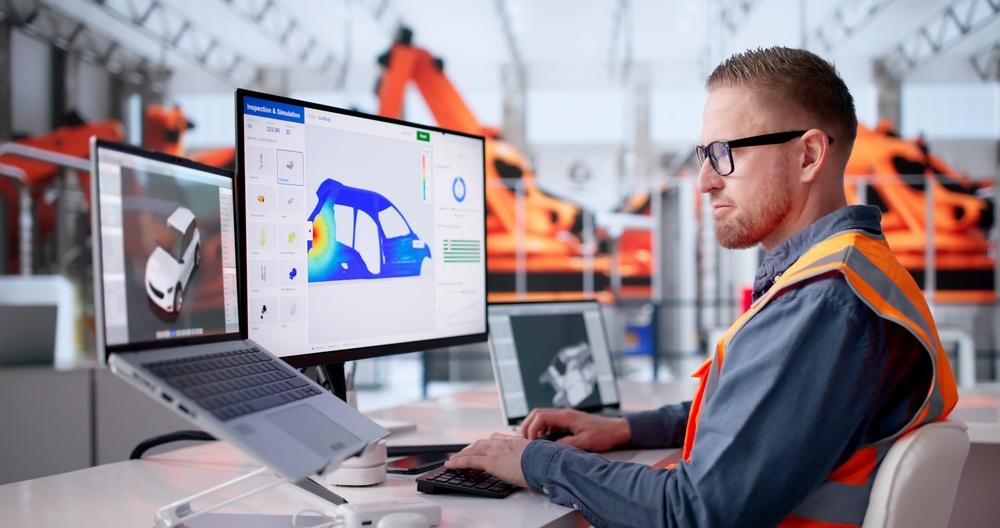 Automotive manufacturers have always been interested in reducing weight, but electrification has made the issue considerably more important. Companies working with modern vehicle production, including Atlas Copco ITBA, are part of an industrial environment in which electric vehicles are creating new requirements for assembly processes, materials and manufacturing technologies.
One of the fundamental challenges is the battery. Battery packs add significant weight to an electric vehicle, particularly when manufacturers aim to provide the long ranges consumers have come to expect from conventional cars. A larger battery may increase the distance a vehicle can travel between charges, but the additional battery cells themselves make the vehicle heavier.
This creates something of a cycle. More weight requires more energy to move the car. Higher energy consumption can encourage manufacturers to install larger batteries, which then add even more weight.
Lightweight construction offers an alternative approach. Instead of focusing exclusively on increasing battery capacity, manufacturers can improve the efficiency of the entire vehicle. A lighter car requires less energy during acceleration and can potentially achieve a useful driving range with a smaller battery.
There are other advantages as well. Lower vehicle weight can reduce loads on tyres, suspension components and other mechanical systems. It may also improve handling and make smaller electric powertrains suitable for certain vehicle categories.
None of this means that every electric vehicle should become extremely small or minimalist. Consumers still expect comfort, safety, luggage capacity and practical everyday usability. The challenge for manufacturers is therefore to remove unnecessary weight without compromising the qualities drivers expect from a modern vehicle.
New materials are changing the way cars are built
Lightweight vehicles depend heavily on material development. Traditional automotive manufacturing has relied extensively on steel because it is strong, relatively inexpensive and well understood. Steel will continue to be important, but modern vehicles increasingly use combinations of different materials depending on the requirements of each component.
High-strength steels can provide the necessary structural performance while allowing some components to be made thinner. Aluminium is commonly considered where low weight and corrosion resistance are valuable. Composite materials and polymers can also be used in selected areas where their properties justify the additional complexity or cost.
The result is a vehicle body that can contain several different material types rather than being based primarily on one. This has significant implications for manufacturing.
Joining two steel components using conventional welding techniques is relatively straightforward in a mature automotive production environment. Connecting aluminium to steel, composites to metal or several different lightweight materials within the same structure may require completely different joining methods.
Adhesive bonding, riveting, self-piercing fasteners and specialised mechanical joining technologies therefore become increasingly relevant. Manufacturers need to determine not only which material provides the best combination of strength and weight, but also how those materials can be assembled consistently at production scale.
Battery construction adds another layer of complexity. Battery modules and packs must be mechanically secure while also protecting sensitive electrical components. Manufacturing processes must achieve reliable connections without damaging cells or introducing contamination into critical areas.
This is why lightweighting cannot be treated purely as a design exercise. Every new material or component affects the production system surrounding it. A technically excellent lightweight component offers little benefit if it cannot be manufactured efficiently, inspected reliably or integrated into a high-volume assembly line.
Smaller batteries could make electric cars more efficient
Much of the competition in the electric vehicle market has revolved around driving range. Long range is easy to communicate and easy for buyers to compare, which has encouraged increasingly large battery packs in some segments.
There is a practical reason for this. Drivers moving from petrol or diesel vehicles may worry about charging availability and journey planning. A large battery provides reassurance and makes the electric vehicle feel more similar to the conventional car it replaces.
Yet extremely long range is not necessary for every driver.
Many cars are primarily used for commuting, shopping, school journeys and other relatively short trips. Carrying a very large battery every day in order to accommodate a small number of unusually long journeys can be inefficient.
Lighter electric vehicles with smaller batteries could therefore become an important alternative. Reducing the size of the battery can lower vehicle weight substantially. That lower weight then reduces energy consumption, which means the vehicle does not need as much stored energy to achieve practical everyday range.
Smaller batteries could also influence how manufacturers use raw materials. Battery production depends on substantial quantities of processed materials and energy. If an efficient vehicle can provide adequate mobility using fewer battery cells, the material requirement per vehicle can potentially be reduced.
Charging behaviour may change at the same time. Instead of treating an electric vehicle exactly like a petrol car that is occasionally filled with a large amount of energy, drivers can charge regularly at home, at work or at public charging locations.
This does, however, depend on charging infrastructure. Lightweight electric vehicles with smaller batteries become much more attractive when charging is convenient and widely available. Vehicle design and charging infrastructure therefore need to develop together.
Manufacturing must adapt to a different type of vehicle
Electrification is often described as a change in propulsion technology, but its impact on automotive factories goes much further. Electric vehicles contain different components, different materials and different assembly requirements from conventional vehicles.
An internal combustion vehicle is built around an engine, fuel system, transmission and exhaust system. An electric vehicle replaces much of that complexity with batteries, electric motors, power electronics and high-voltage systems.
Factories therefore need to adapt both equipment and processes.
Battery assembly demands particularly high levels of precision and traceability. Connections must meet defined specifications, fastening operations need to be controlled and production data may need to be recorded throughout the process. Mistakes that would be inconvenient in another part of the vehicle can become significantly more serious when high-voltage battery systems are involved.
Automation is likely to play an increasingly important role. Modern production lines already use extensive automation, but greater product variation and new vehicle architectures create demand for flexible systems capable of adapting to several models or configurations.
At the same time, manufacturers need detailed process control. Tightening parameters, joining operations and quality inspections can increasingly be monitored digitally. Production data can help identify deviations before they develop into larger quality problems.
The transition towards lighter vehicles reinforces this requirement. Lightweight components can have different tolerances and mechanical characteristics from traditional steel parts. Applying excessive force during an assembly operation may damage a component, while insufficient force can create an unreliable connection.
Production technology must therefore evolve alongside vehicle technology. Designing a lighter electric car is only one part of the challenge; manufacturers must also build it repeatedly, quickly and to the same quality standard thousands of times.
The future may be defined by efficiency rather than size
For decades, automotive development has often moved towards larger vehicles, greater power and more equipment. Electrification creates an opportunity to reconsider that direction.
A highly efficient electric vehicle does not necessarily need an enormous battery or exceptionally powerful motors. For many applications, reducing energy demand could be more valuable than continually increasing energy storage.
This does not mean that large electric vehicles will disappear. Vans, commercial vehicles, family cars and vehicles intended for long-distance travel have different requirements. Batteries and vehicle dimensions will continue to vary considerably depending on how a vehicle is used.
What may change is the idea that more battery capacity is automatically better.
Efficiency can come from several directions simultaneously. Improved aerodynamics reduce resistance at higher speeds. Low-rolling-resistance tyres reduce energy losses. Efficient motors and power electronics convert stored electricity into movement more effectively. Lightweight construction reduces the amount of energy required whenever the vehicle accelerates.
When these improvements are combined, the result can be an electric vehicle that achieves useful performance without relying on excessive battery capacity.
Urban mobility could become particularly interesting. Smaller and lighter electric cars require less road space, consume less energy and can be easier to manoeuvre in dense environments. They could occupy the space between traditional passenger cars and very small forms of urban transport, providing weather protection and familiar automotive comfort without the mass of a large vehicle.
The broader transformation of the automotive industry is therefore about much more than replacing one drivetrain with another. Electrification gives manufacturers an opportunity to reconsider how much vehicle is actually needed to transport people efficiently.
The most successful electric cars of the future may not simply be today’s vehicles fitted with batteries. They may be designed around efficiency from the beginning, with lighter structures, appropriately sized batteries and manufacturing systems developed specifically for electric mobility.
As battery technology, materials and production methods continue to improve, vehicle weight is likely to become an increasingly important competitive factor. Manufacturers capable of delivering the safety, comfort and practicality consumers expect while using less material and less energy will be well positioned for the next phase of automotive development.
The transition to electric mobility has already begun. The next challenge is making that mobility genuinely efficient. In many cases, the answer may not be a bigger battery, a heavier vehicle or more power, but a lighter electric car designed to use every kilowatt-hour more effectively.